






How to Improve Tennis Consistency: Drills and a 4-Week Practice Plan
Tennis consistency is not the ability to hit every ball the same way. It is the ability to produce a useful result often enough while the ball, court position, and pressure keep changing. A reliable player gives the ball safe height over the net, uses a practical target, recovers for the next shot, and recognizes when an error pattern is beginning.
The fastest way to make consistency measurable is to stop judging a session by its best rally. Establish a baseline, track one type of error, and progress only when the current task remains stable. The four-week tennis practice plan below follows that process through contact, direction, movement, and pressure.
Why Tennis Consistency Changes From Day to Day
A stroke can feel reliable in a cooperative rally and disappear when the incoming ball changes. That does not always mean the technique has vanished. Late preparation, poor spacing, fatigue, narrow targets, and an unrealistic shot choice can all reduce the margin available to the swing.
Separate the result from the cause. A ball in the net, a ball long, and a ball missed wide are different errors. So are a clean miss from a balanced position and a miss made while reaching. Recording those differences helps you choose a drill instead of responding to every bad session with a new technical idea.
Track Error Direction Before Changing Technique
For one short set, mark each miss as net, long, left, or right. Add a note when balance or spacing clearly broke down. A cluster of similar errors gives you something useful to test. Randomly changing grip, swing path, pace, and target after every miss makes the next set harder to interpret.
Use a Repeatable Pre-Shot Routine
Consistency begins before contact. Return to a ready position, identify the expected ball, split-step, and prepare early enough to adjust with the feet. Use one simple cue for the set. If you need several technical corrections at once, simplify the feed and ask a qualified coach to help prioritize them.
Establish a Tennis Consistency Baseline
Use the first session as a test rather than a workout. Choose one forehand target and one backhand target, both comfortably inside the lines. Keep the feed or rally cooperative enough that you can observe contact and recovery. Complete three short sets on each side and record the same measures every time.
Record Three Measures That You Can Repeat
Count target successes, longest controlled sequence, and errors by direction. A target success should mean more than landing inside the court: define a generous zone that represents the ball you want to play. Also note whether you recovered before the next ball. These measures show whether control improves without requiring radar data or a perfect stroke.
Keep the Baseline Test Unchanged
Do not raise speed or narrow the target during the baseline. The purpose is to create a test you can repeat in Week 4. Write down court position, target location, ball type, and the machine or partner setup. Conditions will never be identical, but consistent setup makes the comparison more useful.

Week 1: Build Repeatable Contact and Margin
Week 1 removes unnecessary difficulty. Work from a stable court position with a predictable ball and a large crosscourt target. Aim well inside the baseline and sideline. The goal is not to prove how many balls you can hit; it is to repeat preparation, spacing, contact, and recovery without forcing pace.
Crosscourt Control Drill
Complete short forehand sets, then short backhand sets. Start each ball from the same ready position and finish balanced enough to recover. Score one point for a ball that clears the net with safe margin and reaches the target. Stop the set when preparation becomes rushed or the same technical error repeats. Quality sets are more informative than one uninterrupted hopper.
Three-Ball Reset Drill
Hit three controlled balls, pause, and state what happened: target count, main miss, and whether spacing held. Then begin again with the same cue. The pause prevents one error from turning into a faster, tighter swing and teaches you to reset without abandoning the plan.
Week 2: Add Direction Without Losing Control
Week 2 keeps the incoming ball manageable but introduces a second destination. Direction is added before wider movement so you can see whether changing the target also changes balance, contact point, or swing size.
Two-Target Direction Drill
Place one large crosscourt target and one large middle target. Complete a full set to the first zone, then a full set to the second. When both patterns are stable, alternate them in a simple sequence. Do not add more pace to make the directional change. Use court position, contact, and racket-face control appropriate to your coaching method.
Depth Ladder Drill
Divide the court into a shorter safe zone and a deeper safe zone, both away from the lines. Hit a controlled ball to the shorter area, then one to the deeper area. If depth control immediately creates long errors, return to one zone and rebuild the height and pace that gave you margin.
Week 3: Keep Tennis Consistency While Moving
A stationary stroke is only one part of consistency. Week 3 adds recovery and modest movement while preserving the same broad targets. Increase only one demand at a time: feed width, recovery distance, or interval.
Center-Recovery Drill
Mark a central recovery position. Move to one controlled feed, hit toward the chosen target, and return to the mark before the next ball. Score the shot only when both the ball and the recovery meet the goal. If you reach for contact or cannot reset, narrow the feed locations or allow more time.
Short-Wide Adjustment Drill
Use two placements that require different adjustment steps without creating a full-court sprint. Read the ball, organize the feet, and choose a target with enough margin for the less comfortable contact. This drill teaches that consistency sometimes means selecting a safer response, not producing the same aggressive ball from every position.

Week 4: Test Consistency Under Controlled Pressure
Week 4 combines the skills and repeats the original test. Pressure should be added in a way you can measure. A smaller target, a score, a directional sequence, or slightly less recovery time is enough. Changing every variable at once only shows that the new task is harder.
Score to Ten Drill
Choose one pattern and play to ten points against the drill. Award yourself a point for a target ball completed from balance; award the drill a point for an error or failed recovery. Repeat the game after a short rest. The score creates consequence without pretending that a machine feed is the same as a live point.
Repeat the Week 1 Baseline
Recreate the original forehand and backhand test. Compare target percentage, longest controlled sequence, error direction, and recovery quality. Improvement may appear as fewer repeated misses or better balance even when the longest sequence changes little. Keep the next training block focused on the weakest measure rather than restarting the entire plan.
Four-Week Tennis Practice Plan at a Glance
Two or three focused sessions per week can fit this framework, but the right frequency depends on your schedule, physical readiness, coaching plan, and total play. Leave recovery time when fatigue changes movement or technique.
| Week | Main objective | Core drill | Progress check |
|---|---|---|---|
| 1 | Repeatable contact and margin | Crosscourt control | Target success with balanced recovery |
| 2 | Direction and depth | Two targets and depth ladder | Direction changes without a larger swing |
| 3 | Movement and recovery | Center-recovery and short-wide feeds | Contact remains organized while moving |
| 4 | Controlled pressure and retest | Score to ten and baseline repeat | Compare the same measures with Week 1 |
Using TERO Pro for Measurable Consistency Drills
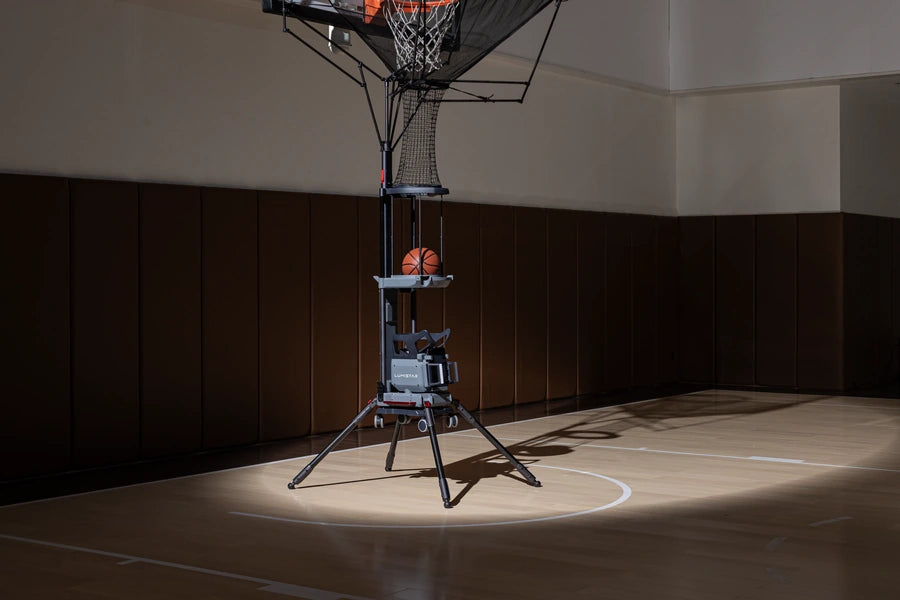
The TERO Pro AI tennis ball machine offers 35 selectable placements, which can help you repeat a baseline location and then add a controlled directional change. App and wristband voice control can reduce unnecessary walks between supported adjustments. The practical rule is still to change one variable at a time so the result remains interpretable.
TERO Pro's Deep Stats tracks swing and movement data, while 4K Recording and Video Archive support later review. Use those records to review patterns rather than treating one session as a verdict. AI Serving and 4K Recording cannot operate at the same time, so choose the function that matches the session goal before starting.
For a wider library of progression ideas, use the ball machine drills for tennis guide. This four-week plan stays focused on measurement and progression instead of collecting unrelated drills.
Review Progress Without Chasing Perfect Numbers
No target percentage applies to every player and drill. A beginner using a large stationary target and an advanced player moving to a narrow tactical zone are not taking the same test. Compare your result with your own baseline under a similar setup.
Look for a trend across several sessions. One strong day may reflect favorable timing, while one poor day may reflect fatigue or unfamiliar conditions. If pain, persistent discomfort, or a sudden loss of control appears, stop and seek appropriate professional guidance rather than using more repetitions to push through it.

Transfer Practice Consistency Into Points
A repeatable feed helps isolate a skill, but match consistency requires reading an opponent, choosing a response, recovering, and handling score pressure. After each machine-focused week, include cooperative rallying, serve and return work, and live points. Start with a simple constraint—such as using a large crosscourt target—before removing it.
Expect the match version to lag behind the drill. That gap does not make the drill useless; it shows which decisions and movement patterns still need live practice. A coach or qualified observer can also identify technical problems that a target score cannot diagnose.
Conclusion
To improve tennis consistency, measure a repeatable task before adding difficulty. Build contact and margin in Week 1, direction in Week 2, movement in Week 3, and controlled pressure in Week 4. Track target success, error direction, sequence length, and recovery quality, then use the retest to choose the next priority. Consistency grows when repetition has a clear purpose and progress is judged against the same task.
Frequently Asked Questions
Why Am I Inconsistent in Tennis Even When My Strokes Feel Good?
Stroke shape is only one factor. Preparation, spacing, shot selection, fatigue, incoming-ball variation, and recovery can all change the available margin, so track where and how errors occur before changing technique.
How Long Does It Take to Become Consistent at Tennis?
There is no universal timeline because the goal, starting level, practice quality, coaching, and playing frequency differ. Use four weeks as a review cycle, not a promise, and compare repeatable measures across several cycles.
How Many Balls Should You Hit in a Tennis Practice?
Use enough balls to observe a pattern, but stop a set when fatigue, rushed preparation, or repeated poor contact reduces its value. Set length should follow the drill goal and shot quality rather than one fixed number.