

Tennis Ball Machine for Beginners: Features, Settings and First Drills
A tennis ball machine for beginners should make the incoming ball easier to understand, not make the session faster or more complicated. The most useful features are dependable repetition, adjustable pace and timing, clear controls, and enough placement choice to add movement gradually. Begin with one comfortable feed and one visible goal. More speed, spin, locations, and patterns belong later, after balance and contact stay reliable.
Is a Tennis Ball Machine Useful for a Beginner?
Yes, when it solves a specific practice problem. A machine can provide repeated balls to a selected area without requiring a partner to feed accurately. That consistency helps a new player work on preparation, spacing, contact, direction, and recovery in short, focused sets.
Repetition can also preserve a mistake. A machine does not automatically know whether your grip, swing path, or court position is appropriate. Beginners get more value when a coach or experienced instructor first establishes a simple technical goal, then the machine supplies the repetitions needed to practice it.
Features That Matter More Than Maximum Speed
The best tennis machine for a new player is not necessarily the one with the highest headline specifications. It is the one that can create a manageable ball consistently and grow with the player without making basic sessions difficult to operate.
A Predictable Starting Feed
A beginner should be able to select one location, a comfortable trajectory, moderate pace, and enough time to reset. Predictability reduces the number of variables competing for attention. Once the player can prepare, hit, and recover without rushing, a second location or a small change in depth can introduce a useful new problem.
An Interval That Allows a Full Reset
Feed timing matters as much as ball speed. The next ball should not arrive while the player is still off balance or watching the previous shot. Look for a machine that allows a deliberate rhythm and lets the user start or stop the feed easily. A shorter interval can add intensity later, but it should not force poor preparation during the first sessions.
Simple Controls From the Playing Position
App, remote, or wristband controls can reduce repeated walks across the court. The important question is whether the beginner can pause the machine, select a suitable drill, and change one setting without losing track of the session goal. A long feature list is less useful than a control method that makes safe adjustments clear.
Room to Add Placement and Movement
One feed location builds the base, but a good tennis ball machine should also support progression. Additional placements let the player learn small spacing adjustments, alternate sides, and recover after contact. The change should be gradual. Wide, random movement is not the right starting point simply because the machine can create it.
How to Choose Beginner Settings
There is no universal beginner speed, spin, height, or interval. The right feed depends on the player鈥檚 age, reach, coordination, court position, ball type, and current stroke. Use the machine鈥檚 approved setup instructions, begin conservatively, and judge the result at the player鈥檚 contact point rather than by the number shown on a control screen.
Start With One Location and a Large Target
Direct the feed to one comfortable side and place a generous target well inside the opposite court. The player should have time to turn, move into position, make a smooth swing, and regain balance. If most contacts are late or crowded, reduce the difficulty by changing pace, interval, placement, or the player鈥檚 starting position.
Use a Manageable Bounce and Pace
A slow number on the machine does not guarantee an easy ball. A high bounce, awkward depth, or unfamiliar spin can still make the feed difficult. Test a small number of balls before beginning the drill and adjust only one condition at a time. The goal is a repeatable contact zone, not the lowest or highest available setting.
Keep the First Sets Short
Short sets create natural moments to evaluate what happened. After a small group of balls, stop and answer one question: Was the player balanced at contact, able to reach the target, and ready before the next feed? Continue when the answer is mostly yes. Simplify the feed when the same problem appears repeatedly.
Three First Ball Machine Drills
These drills introduce rhythm, direction, and movement without turning the session into a complete stroke lesson. Use one measurable goal in each drill and stop before fatigue changes the movement you are trying to learn.
One-Location Rhythm Drill
Send a comfortable ball repeatedly to one side. Begin in a ready position, make a small split step as the feed starts, move into the contact zone, hit at a controlled pace, and reset. Count balanced contacts rather than hard shots. Players who need a more detailed stroke progression can follow these tennis forehand drills for beginners before adding more locations.
Large-Target Direction Drill
Keep the incoming feed unchanged and place one large target through the middle or crosscourt. Try to send several balls through the same safe area with comfortable net clearance. Direction should come from a repeatable setup and swing, not from hitting harder after a miss. Record target success for one short set, then repeat under the same conditions.
Two-Location Move and Recover Drill
After both sides are reasonably stable in separate drills, alternate between two nearby placements. Split step, move, hit, and recover toward the starting area before the next feed. Keep the width small enough that the player arrives with balance. If recovery disappears, return to one location or lengthen the interval.

How to Make the Drill Harder Without Losing Control
Increase one variable at a time. You can move the target deeper, add a second location, shorten the interval slightly, introduce a different bounce, or increase pace. Do not change all of them in the same set. When contact quality drops, you need to know which new demand caused the problem.
Use a simple progression rule: the current skill should remain visible after the change. If a player could finish balanced at one location but begins reaching and rushing when a second location is added, reduce the movement range. Progress is not reaching the hardest setting. It is keeping useful habits while the incoming ball becomes less predictable.
How TERO Fits Beginner Practice
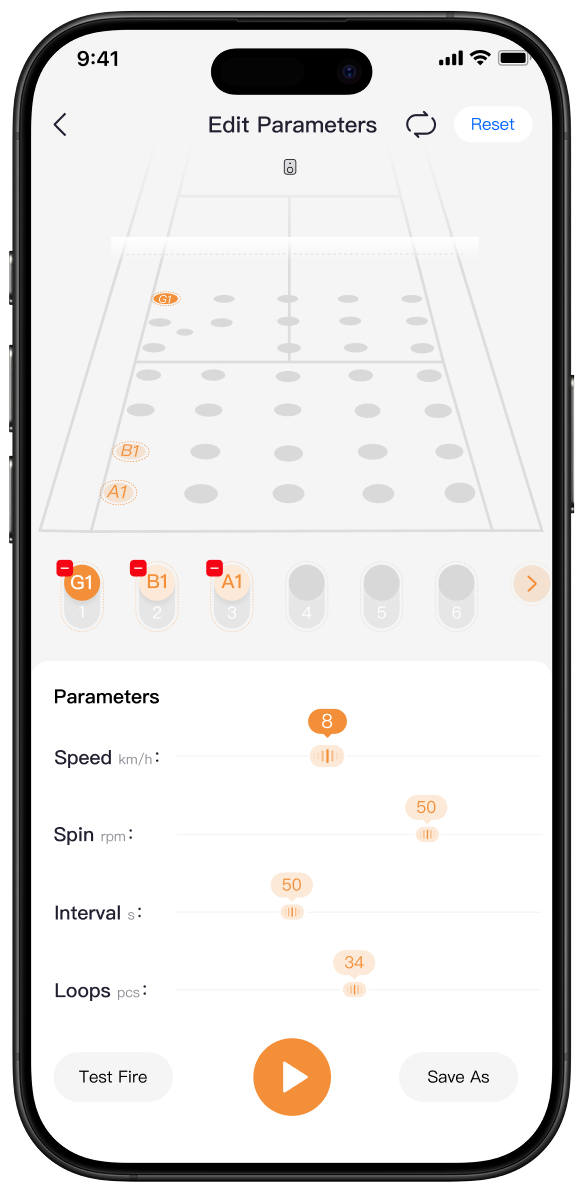
The TERO smart tennis ball machine supports preset drills and app-customized training patterns. App and wristband voice control let players adjust a session from the baseline, which can reduce interruptions between short sets. A beginner can begin with one defined feed and use the broader drill library later as movement and consistency improve.
TERO offers 35 selectable placements, speeds up to 87 mph, and a range of up to 26 meters. Those maximum capabilities provide room for progression, but beginners do not need to train near the limit. Select settings that create a comfortable contact zone and add placement variety only after preparation and recovery remain organized.
Reliable Repetition and Everyday Setup
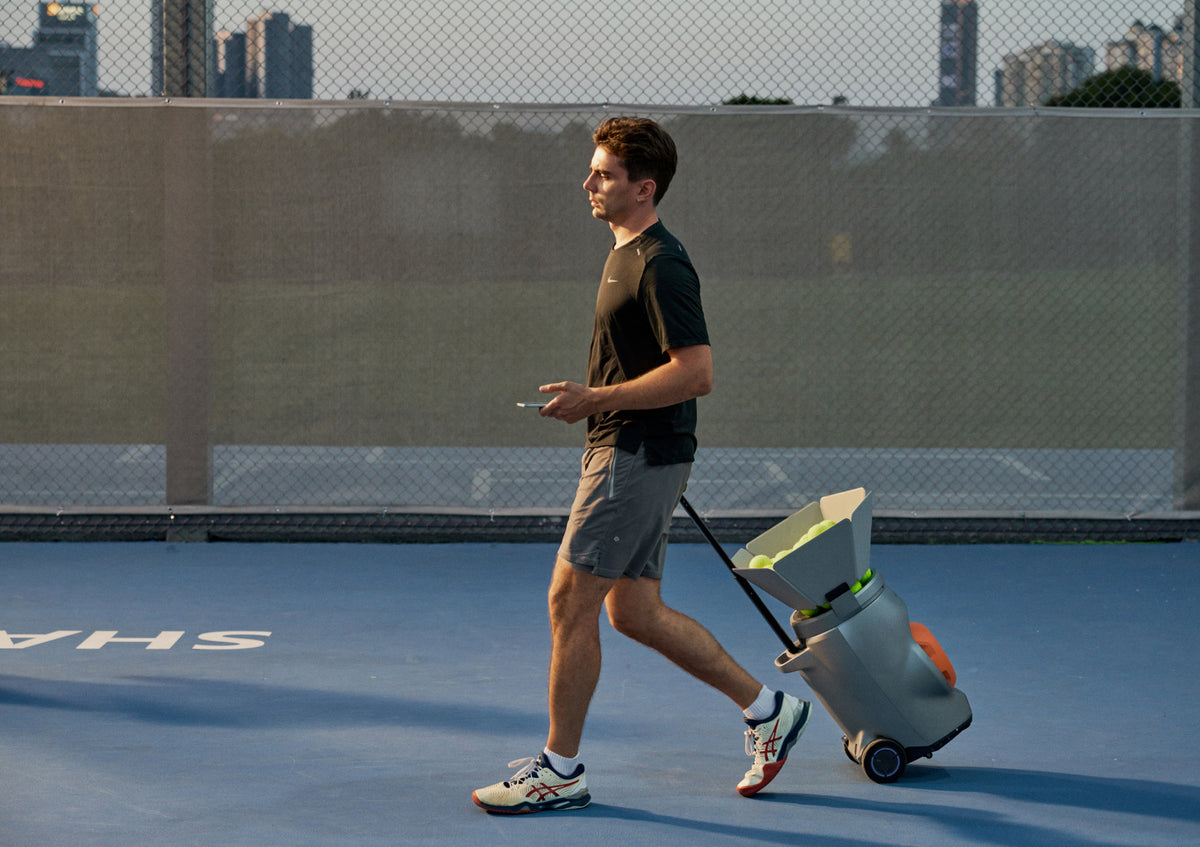
TERO鈥檚 Anti-Jam System helps reduce interruptions, while Self-Cleaning Airflow helps expel ball fuzz during serving. Its suitcase-style folding and rolling design supports regular transport to the court. These features do not replace normal inspection, cleaning, or setup, but they can make frequent beginner practice easier to repeat.
What a Ball Machine Cannot Teach by Itself
A machine can repeat the ball, but it cannot fully diagnose why a stroke misses. A qualified coach can identify technical causes, choose an appropriate correction, and confirm whether repeated practice is reinforcing the intended movement. Video can help a player observe a result, but observation is not the same as expert diagnosis.
Machine feeds also do not reproduce every visual cue, imperfect ball, tactical choice, or score pressure found against another person. Use controlled repetition to build contact and movement, then connect those skills to coach feeds, partner rallies, serves and returns, and simple points.
A Beginner Buying Checklist
A good tennis ball machine should make your most common practice easier to complete. Compare the features below with the sessions you expect to play during the first few months.
| Check | Beginner question | Why it matters |
|---|---|---|
| Feed control | Can it create one comfortable, repeatable ball? | Builds a clear starting point |
| Interval | Can the player reset before the next feed? | Protects preparation and balance |
| Placement | Can difficulty expand gradually? | Supports movement without immediate overload |
| Controls | Can the feed be paused and adjusted easily? | Keeps short sets organized |
| Portability | Can one person manage the normal route? | Determines whether the machine gets used |
| Ball guidance | Which balls and conditions are approved? | Supports consistent feeding and maintenance |
| Support | Are instructions, warranty, parts, and service clear? | Matters throughout ownership |
Use tennis ball machine reviews to create questions, not to replace them. Confirm whether a review describes published specifications or actual testing, whether the lowest settings were evaluated, and whether the machine was used with a uniform basket of compatible practice balls.
Conclusion
A tennis ball machine for beginners should provide a clear starting ball, enough time to reset, simple control, and a gradual path from repetition to movement. Begin with one location and one target, use short sets, and change one variable at a time. TERO supports that progression through preset and customized training, baseline controls, and 35 selectable placements, while leaving room for faster and more varied practice as the player develops. Pair machine repetition with coaching and live play so clean practice contacts become usable tennis skills.
Frequently Asked Questions
Should a Beginner Rent a Tennis Ball Machine Before Buying?
Renting or borrowing one can help you learn whether the controls, transport routine, and feed range fit your practice habits. Use the trial to repeat the sessions you would actually do rather than testing only the fastest or widest settings.
Do Beginners Need Special Tennis Balls for Machine Practice?
Use only balls allowed by the machine鈥檚 current instructions. A uniform basket with similar wear and bounce generally produces more consistent feeds than mixing balls in very different conditions.
Can Children Use a Tennis Ball Machine?
Children should use a machine only with appropriate adult supervision and according to the manufacturer鈥檚 safety and operating instructions. The feed, court position, session length, and controls should match the child鈥檚 size, coordination, and experience.
