




Can You Use a Tennis Ball Machine on a Public Court? Rules to Check
You can use a tennis ball machine on some public courts, but permission is determined by the facility—not by a universal tennis rule. Before bringing a machine, confirm whether personal machines are allowed, whether a court reservation is required, and whether the site limits solo play, ball quantities, operating hours, or specific courts. If the posted rules do not answer the question, contact the parks department, recreation center, or court operator before your session.
Public Court Rules for Tennis Ball Machines Vary by Facility
Public does not always mean unrestricted. Courts may be managed by a city, school, community association, concession operator, or tennis center, and each can set different conditions. One facility may welcome a personal machine during a normal reservation, while another may allow only its own rental equipment or assign machines to certain courts.
Treat local rules as the controlling source. Online booking pages, posted signs, permit terms, and staff instructions can all matter, and the most current instruction should take priority over advice from another court or an older forum post.
Court Permission and Court Reservation Are Separate Checks
Permission to use a machine does not necessarily reserve a court. Some facilities book the court and the facility-owned machine separately; others require only a court reservation but still need approval for personal equipment. Confirm both before arriving so a machine booking does not leave you without a court—or a court booking without permission to use the machine.
Personal Machines and Facility Rentals May Follow Different Rules
A center that rents ball machines may still restrict privately owned machines. Ask specifically whether you may bring your own equipment, whether a fee applies, and whether the court assignment changes when a machine is involved. Do not assume that seeing a rental machine proves personal machines are permitted.
What to Check Before Using a Ball Machine on a Public Court
A short rules check can prevent most conflicts. Use the facility's current website or booking system first, then contact staff when the policy is silent or unclear.
| Check | Question to ask | Why it matters |
|---|---|---|
| Permission | Are personal tennis ball machines allowed? | Some facilities permit only their own equipment or prohibit machines entirely. |
| Reservation | Must I reserve a court, the machine, or both? | A machine booking and a court booking may be separate. |
| Court assignment | Are machines limited to an end court or designated court? | Court location can affect ball containment and neighboring play. |
| Solo-use rule | May one player occupy a court during this time? | Walk-up and peak-hour rules may prioritize rotation or doubles. |
| Ball limits | Are hoppers, carts, or large quantities of balls restricted? | Some facilities regulate containers or require facility equipment. |
| Time window | When must setup, pickup, and exit be complete? | Cleanup normally belongs inside the reservation. |
| Supervision | Are there age or adult-supervision requirements? | Some machine policies set separate rules for minors. |
| Conditions | Are there weather, wet-court, or closure restrictions? | Court and equipment use may stop during unsafe conditions. |
Plan the Reservation Around Setup and Ball Pickup
Your reservation should cover more than active hitting. Allow time to position the machine, confirm a safe feed, collect every ball, remove markers, and leave the court before the next booking starts. A one-hour court reservation is not a promise of one full hour of feeds.
If the facility uses walk-up limits instead of reservations, check how long one player may occupy the court and what happens when others are waiting. A solo practice session does not automatically receive priority over a posted rotation rule.

Protect Players on Neighboring Public Courts
Loose balls are the main shared-court concern. A ball rolling into an adjacent point can cause a distraction or a fall, so ball containment matters as much as the machine setting. Use divider nets when the facility requires them, and prefer a designated or end court when that is the local policy or the safer available choice.
Keep Feeds and Targets Inside Your Court
Start with a controlled test rather than a high-speed or wide-placement drill. Confirm that feeds, returns, and misses remain inside the court enclosure. Avoid aiming a pattern toward an open gate, walkway, or shared space, and stop the machine before anyone enters its feed path.
Stop Play When a Loose Ball Creates a Hazard
Pause the feed when a ball reaches another court or when a neighboring ball enters yours. Wait for a break in play before retrieving a ball from an occupied court; do not cross behind players during a point. If containment is repeatedly failing, simplify the pattern, collect balls sooner, or end the machine session.

Ball Machine Court Etiquette Includes Frequent Pickup
A large hopper does not mean every ball should remain on the surface until it is empty. Collect early enough to keep the baseline, sidelines, gate, and neighboring boundaries clear. Smaller batches can reduce the number of loose balls and make cleanup easier to finish within the booking.
Keep Shared Areas Clear
Store bags, ball containers, targets, and pickup tools where they do not block gates, benches, walkways, or access to another court. Use only equipment the facility permits, and do not attach anything to nets, fences, or court fixtures unless the operator allows it.
Leave the Court Ready for the Next Players
Finish collecting before the reservation ends. Remove all balls, markers, packaging, and personal items, then check the net area and court edges for anything missed. If you used facility equipment, return it according to the local process rather than leaving it courtside.

How TERO Pro Can Fit a Rule-Compliant Court Session
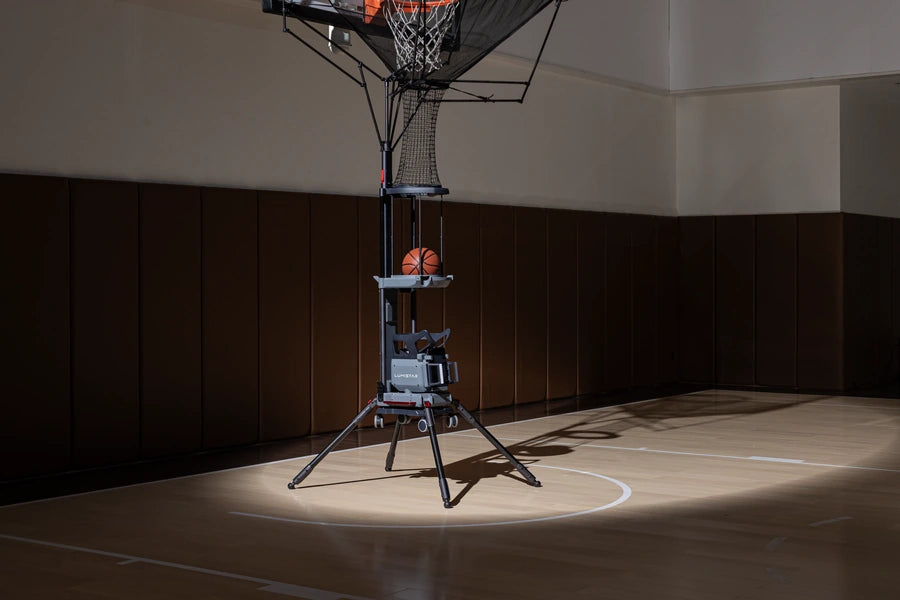
The TERO Pro AI tennis ball machine includes Court Auto-Calibration to help simplify setup. App control and wristband voice control can reduce unnecessary walks back to the machine for supported adjustments. Those conveniences can help preserve practice time, but they do not override facility permission, reservation limits, or local safety requirements.
Use a controlled initial setting and confirm the court boundaries before expanding placement. TERO Pro offers 35 selectable placements and speeds up to 87 mph, but a public-court session should use only the range that keeps feeds and returns manageable within the booked court.
A Public Court Ball Machine Checklist
Before leaving home, verify permission, reservation details, court assignment, solo-use limits, ball-container rules, and weather status. At the court, inspect gates and neighboring play, test a controlled feed, and decide where balls and accessories will stay. Before the final minutes, stop feeding and complete pickup so the next players receive a clear court on time.
For transport, battery planning, and storage questions, use the separate portable tennis ball machine guide. Keeping those ownership topics separate lets this checklist stay focused on public-court access and conduct.
Conclusion
A tennis ball machine can be appropriate on a public court when the facility allows it and the session respects reservation, safety, pickup, and rotation rules. Verify the exact court policy before every unfamiliar venue, contain loose balls, include cleanup in your booking, and treat neighboring players' safety as part of the drill. Local permission—not the machine model—decides whether the session can go ahead.
Frequently Asked Questions
What If the Public Court Rules Do Not Mention Ball Machines?
Do not treat silence as automatic permission. Contact the facility operator or parks department and ask specifically about personal machines, solo court use, ball containers, and any designated-court requirement.
Can You Use a Ball Machine During Walk-Up Court Hours?
Only if the facility permits machines and your solo use follows its walk-up time and rotation rules. Be prepared to finish pickup and yield the court when the posted limit ends.
Do You Need a Permit for Ball Machine Practice?
Some public systems require a general tennis permit or reservation, while others may apply additional rules to instruction, organized activity, or equipment. Check the exact facility rather than assuming recreational machine practice is treated the same everywhere.